Cooperation and training of Kyiv Zoo specialists in the USA
Kyiv Zoo pays special attention to the development of conservation projects, which is a marker of a real zoo as a scientific and environmental organization. We would like to share the experience of cooperation and training of our specialists in the USA.
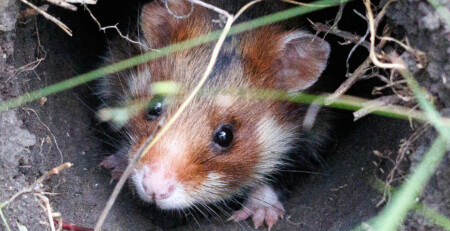
On April 27, 2025, a group of three Ukrainian scientists from Kyiv Zoo arrived in San Diego for an educational trip together with the San Diego Zoo Wildlife Conservation Alliance. The trip was financed by the host party. Kyiv Zoo of national importance is conducting a program of breeding and reintroduction of the European hamster (Cricetus cricetus), which is currently under threat of extinction in the steppe region of Ukraine. The project is headed by Mykhailo Rusin, Candidate of Biological Sciences, who is also a member of the SMSG (Expert Group on the Conservation of Rare Small Mammals). In support of this program, Zoo New England (ZNE) applied for and received a grant from the Trust for Mutual Understanding to provide scientists from our war-torn country with the opportunity to learn from one of the world’s leading mammal breeding and reintroduction teams.
The Ukrainian team was led by Peter Zaler from ZNE, also a member of the SMSG, and hosted by Dr. Debra Shire. Dr. Shire and her team work on small mammal conservation, including a highly successful program to rescue Stephen’s kangaroo rat (Dipodomys stephensi) and a conservation program for the Pacific pocket mouse (Perognathus longimembris pacificus), which the Ukrainians learned about during their visit. These tiny mice, the smallest in North America, were thought to be extinct until a small population was discovered in the 1990s. They are currently found in only three locations and their numbers are likely to be as few as 200 along the Southern California coast.
Over the course of nine days, Kyiv Zoo scientists learned about advanced methods of husbandry and breeding, genetic research, animal health assessments and modern data management protocols. They also learned about developing behavioral skills in mice to prepare them for life in the wild, including predator avoidance, shelter use, and foraging.
A team of Ukrainians participated in the release of 50 Pacific pocket mice. Now our specialists have returned to Ukraine where they will put their knowledge to practical use in the conservation of the European hamster.
Of course we also visited the San Diego Zoo, the San Diego Safari Park, the largest veterinary clinic in the world, and the famous Frozen Zoo, which houses hundreds of thousands of genetic samples for scientific research. We also transferred materials about our hamster and bat programs to the Beckman Center Library.
We are extremely grateful to everyone who made this training possible, provided organization and funding, shared their knowledge, experience, and achievements. Our zoo will develop the project with new strength and inspiration!