

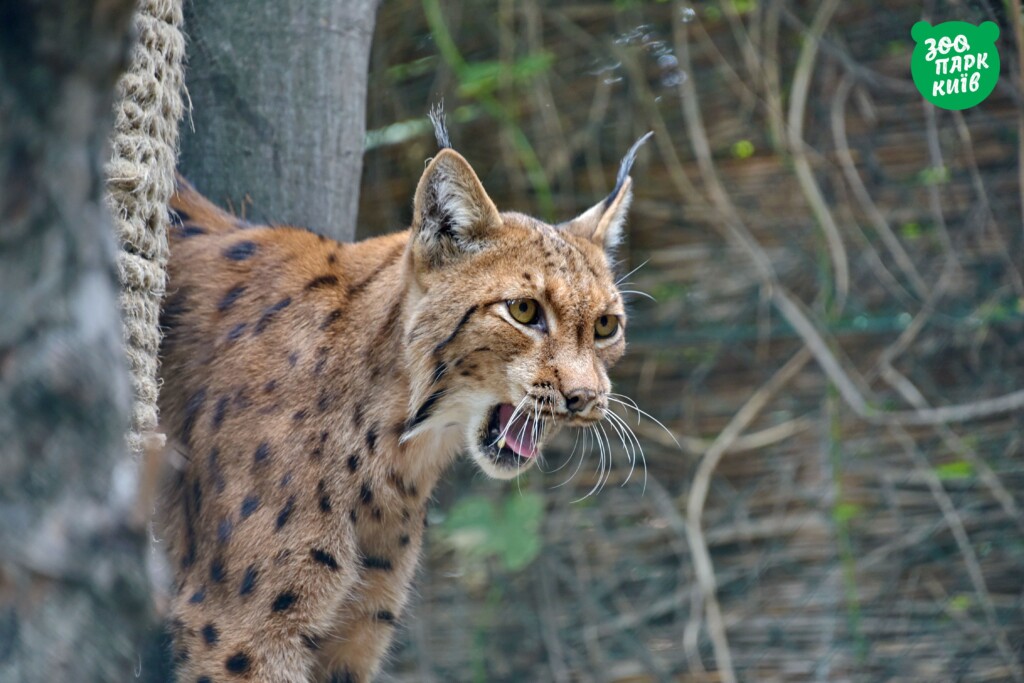
Eurasian lynx
Lynx lynx
It occurs across a wide variety of ecological and climatic conditions, from the Atlantic coast of Western Europe reaching the Pacific coast in the Far East
Full Classification
Class – Mammalia (Mammals)
Order – Carnivora (Carnivores)
Family – Felidae (Cats)
Subfamily – Felinae (Small cats)
Genus – Lynx
Species – Lynx lynx
General Information
The Eurasian lynx has one of the largest geographical ranges of all species in the cat family. It occurs across a wide variety of ecological and climatic conditions, from the Atlantic coast of Western Europe. Its range extends across the entire zone of mixed and boreal forests to Central Asia and the Tibetan Plateau, reaching the Pacific coast in the Far East. In Central Asia, Eurasian lynx also inhabit more open, sparsely forested areas and steppe habitats.
The European population of the Eurasian lynx is estimated at approximately 9,000–10,000 individuals (excluding populations in Belarus and Russia) and is divided into ten separate subpopulations according to their geographical distribution. The Eurasian lynx disappeared from much of Western Europe and has subsequently been reintroduced in countries including Austria, the Czech Republic, France, Germany, Italy, Slovenia, and Switzerland. In Ukraine, the Eurasian lynx population is estimated at approximately 350–400 individuals in the Carpathian region and 80–100 individuals in Polissia.
The Eurasian lynx has the longest legs among the species of the genus Lynx, measuring approximately 60–75 cm. In winter, the paws become more densely covered with fur, helping the animal move through deep snow much like natural snowshoes. The body length ranges from 80 to 100 cm, while the tail is short, measuring approximately 10–20 cm, with a characteristic black tip. The animal weighs approximately 15–25 kg, with males generally being 25–30% heavier than females. The coat colour varies from grey to reddish or yellowish, and may be covered with black spots or relatively uniform in colour. A distinctive feature of lynx species is the presence of black tufts of hair at the tips of the ears.
The Eurasian lynx is a highly skilled predator with an excellent sense of hearing and very good eyesight. It is capable of taking prey several times its own size, such as deer or wild boar, although its diet consists mainly of small and medium-sized prey, including roe deer, hares, birds, and rodents. The Eurasian lynx is a solitary and territorial animal, and the size of its home range varies widely, from approximately 100 to 1,000 km². It is most active around dawn and dusk. Its lifespan ranges from approximately 13 to 25 years.
Females usually begin breeding at around two years of age, while males reach sexual maturity at approximately three years. The mating season occurs from February to early April, when lynx may also be active during the daytime. Gestation lasts approximately 2–2.5 months, after which the female gives birth to 1–4 kittens. At around two months of age, the kittens begin accompanying their mother on hunting trips and become independent at approximately ten months of age.
What are the main threats to the Eurasian lynx?
- Loss and fragmentation of habitat due to infrastructure development, logging, and livestock farming, particularly in parts of Asia;
- Human–lynx conflict, including competition between lynx and hunters over wild game;
- Hunting and poaching for its valuable fur.
The Eurasian lynx is protected under:
- Appendix II of the CITES Convention (Convention on International Trade in Endangered Species of Wild Fauna and Flora);
- Appendix III of the Bern Convention (Convention on the Conservation of European Wildlife and Natural Habitats);
- Annexes II and IV of the EU Habitats Directive;
- The Red Data Book of Ukraine.
The Eurasian lynx is classified as Least Concern (LC) on the IUCN Red List of Threatened Species™. However, the conservation status of some Eurasian lynx populations, particularly several Western European populations, is considerably more critical, with some classified at the national or regional level as Critically Endangered (CR) or Endangered (EN).
5 Interesting facts:
- The characteristic black ear tufts are one of the Eurasian lynx’s most distinctive features. They are thought to play a role in sound perception and localisation, although their exact function is still not fully understood.
- In winter, the Eurasian lynx’s paws become more densely covered with fur. Its large, broad feet help it move through deep snow by reducing the risk of sinking.
-
The Eurasian lynx can vary in colour from greyish to reddish or yellowish. The number and arrangement of its spots also vary between individuals, making the coat pattern useful for identifying individual animals.
- The Eurasian lynx mainly hunts medium-sized prey such as roe deer, hares, and rodents. However, it is capable of taking prey considerably larger than itself, including adult roe deer and, occasionally, young deer.
- Eurasian lynx are predominantly solitary animals. Males and females usually come together only during the breeding season, while females raise their kittens alone. Each adult lynx has its own territory, which it marks using scent.
Інші мешканці

Serval
Leptailurus serval
The serval is a medium-sized wild cat found mainly in sub-Saharan Africa.
Детальніше
