Ussuri white-breasted bear
Ursus thibetanus ussuricus
It is distributed across southern Siberia, southweastern China, and the Korean Peninsula.
Full Classification
Class – Mammalia (Mammals)
Order – Carnivora (Carnivores)
Family – Ursidae (Bears)
Genus – Ursus (Bears)
Species – Ursus thibetanus
Subspecies – Ursus thibetanus ussuricus
General Information
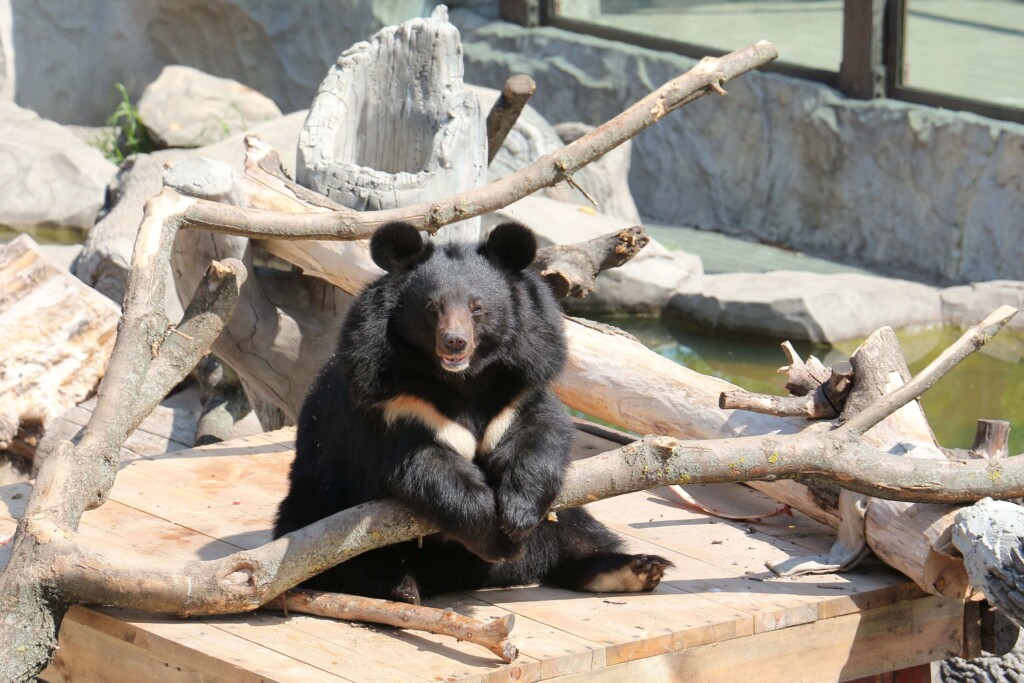
The Ussuri white-breasted bear is a subspecies of the Asiatic black bear (Himalayan black bear). Its name is derived from the Ussuri River in the Far East. It is distributed across southern Siberia, southwestern China, and the Korean Peninsula. In South Korea, it is known as the Manchurian bear. It is the largest of the Asiatic black bear subspecies and is characterized by a distinctive cream-coloured or white crescent-shaped chest marking and relatively large ears compared with other subspecies.
Unlike the brown bear, the Ussuri white-breasted bear has a semi-arboreal lifestyle. It climbs trees to find food and may also use them as a refuge from predators or other threats. It is most active in the morning and evening. Adults generally weigh between 70 and 150 kg. Body length is approximately 120–190 cm, height at the shoulder is about 70–100 cm.
The diet consists primarily of plant material, including plants, roots and rhizomes, nuts, and other vegetation. Bears also consume insects, bird eggs, and small mammals, and may feed on carrion when available.
These bears are generally solitary animals. They are sometimes considered highly defensive or aggressive when confronted by humans, particularly when surprised or threatened. During winter, they enter a period of winter dormancy, usually spending it in a den. Their lifespan is approximately 25–30 years.
Females usually give birth to 1–2 cubs during the winter. The gestation period lasts approximately 7–8 months.
What are the main threats to Ussuri white-breasted bears?
- Degradation and loss of natural habitats;
- Illegal trophy hunting;
- Human–bear conflict.
The conservation status of the species on the IUCN Red List of Threatened Species™ is Vulnerable (VU).
5 Interesting facts:
- The Ussuri white-breasted bear is an excellent climber and is much more arboreal than the brown bear. It may climb trees to find food, rest, or escape danger.
- The distinctive pale crescent-shaped chest marking is one of the most recognisable features of the Asiatic black bear. Its shape, size, and colour can vary between individuals.
- These bears have relatively large, rounded ears. Together with their elongated muzzle and pale chest marking, this feature helps distinguish them from some other bear species.
- Despite belonging to the order Carnivora, Ussuri white-breasted bears eat predominantly plant-based food. Their diet includes fruits, nuts, seeds, herbs, and other plant material, supplemented with insects and animal food.
- During the cold season, Ussuri white-breasted bears enter a state of winter dormancy and spend this period in a den. Females may give birth to cubs during this time, and the newborns remain in the den with their mother.