
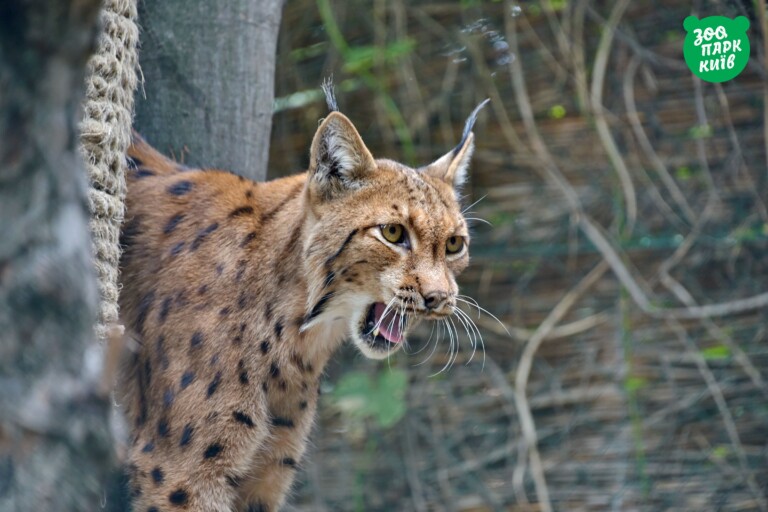
Eurasian lynx
Lynx lynx
It occurs across a wide variety of ecological and climatic conditions, from the Atlantic coast...
Детальніше
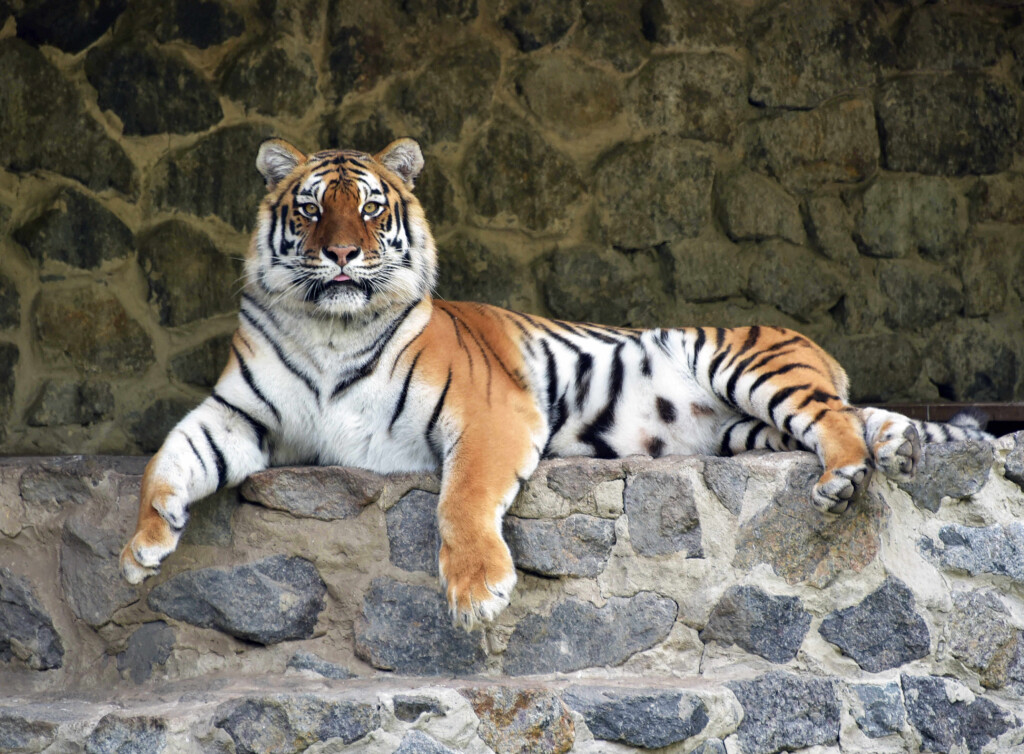
Tigers inhabit a wide variety of habitats, ranging from tropical evergreen and deciduous forests of South and Southeast Asia to coniferous, shrubland, and birch forests of the Far East.
Class – Mammalia (Mammals)
Order – Carnivora (Carnivores)
Family – Felidae (Cats)
Subfamily – Pantherinae (Big cats)
Genus – Panthera
Species – Panthera tigris
Tigers inhabit a wide variety of habitats, ranging from tropical evergreen and deciduous forests of South and Southeast Asia to coniferous, shrubland, and birch forests of the Far East. They can be found in lowland areas, such as the swamp forests of Sumatra, as well as in the dry high-altitude regions of Bhutan, where tigers have been recorded at elevations of up to 4,000 m above sea level. The oldest known fossil remains of tigers, dating back approximately 2 million years, have been found in China and on the island of Java, Indonesia.
Historically, tigers had a much wider distribution across Asia, ranging from Turkey in the west to the eastern coast of Russia. Over the past 100 years, tigers have disappeared from southwestern and Central Asia, from the Indonesian islands of Java and Bali, and from most of Southeast and East Asia. Today, they occupy less than 6% of their historical range.
The tiger is the largest species in the cat family (Felidae), although there are considerable differences between subspecies. Males may weigh between 100 and 300 kg, while females generally weigh 75–170 kg. Body length ranges from approximately 2 to 3.3 m. The tiger is the only cat species with a striped coat, and the stripe pattern is unique to each individual.
The main components of a tiger’s diet are large ungulates, but tigers may also prey on birds, fish, rodents, amphibians, reptiles, and other animals. Unlike most cats, tigers are excellent swimmers. They are solitary animals, and the size of their territories depends largely on the availability of prey and, in the case of males, on the presence of females in the area. A female’s territory averages around 20 km², while a male’s territory may cover approximately 100 km². Tigers generally live for 10–15 years in the wild and are most active during the night and twilight hours.
A female tiger gives birth to 2–4 cubs after a gestation period of approximately 3–3.5 months. Cubs do not begin hunting independently until they are about 18 months old and usually remain with their mother until they are 2–3 years old, after which they begin searching for their own territory.
In 2010, the 13 countries where wild tiger populations remained signed the St Petersburg Declaration on Tiger Conservation. Its main goal was to unite international efforts to double the number of wild tigers, which at the time was estimated at approximately 3,200–3,500 individuals. Conservation measures include protecting natural habitats, establishing transboundary corridors to facilitate the movement of animals, and minimising the negative impact of infrastructure development in tiger habitats.
To raise public awareness about tiger conservation, World Tiger Day is celebrated annually on 29 July.
The tiger is classified as Endangered (EN) on the IUCN Red List of Threatened Species™.
The tiger is protected under:
